

Petrol in a Diesel Car? Here’s Everything You Need to Know
Putting petrol in a diesel car is, by a wide margin, the most common misfuelling mistake made on UK roads. Industry estimates suggest it happens somewhere in the country roughly once every three to four minutes — which, across a year, adds up to well over 150,000 incidents. If you’ve just realised you’ve done this, you’re in good company, and more importantly, you’re not facing a situation that can’t be fixed. What matters most right now is what you do in the next few minutes
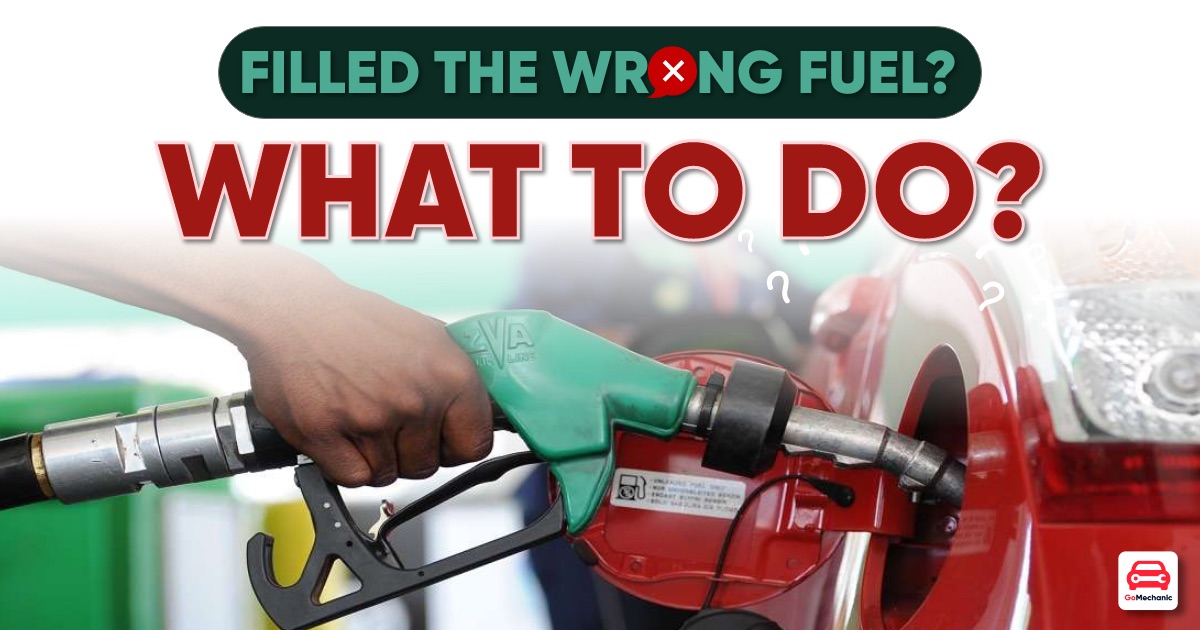
If you haven’t started the engine: don’t.
Leave the car exactly where it is, put the handbrake on, and if you’re at a fuel station, ask a member of staff or a bystander to help push the car out of the way of the pump rather than driving it, even a few metres.
If you’ve already started the engine
turn it off immediately, as soon as it’s safe to do so. Every additional second the engine runs on the wrong fuel increases the amount of petrol that circulates through the fuel system and the potential cost of repair.
Wrong Fuel Draining Process
- Fuel Tank Clean Up
- Fuel Filter Clean Up
- Fuel Line Clean Up
- Fuel Pump Clean Up
- Fuel Injector Clean Up
 This page explains, in detail, why petrol causes the specific kind of damage it does to a diesel engine, what symptoms to watch for, what our recovery process involves, how much it typically costs, how the situation differs depending on your vehicle type, and answers to the most common questions we’re asked by drivers in this exact situation.
Why Does This Happen So Often?
Before getting into the mechanics of the damage, it’s worth understanding why petrol-in-diesel is such a persistently common mistake, because the reasons are mostly structural rather than about carelessness.
Nozzle design.
Since 2019, EU and UK regulations have required diesel pump nozzles to be a minimum diameter that in theory prevents them from fitting into a petrol filler neck. However, no such restriction exists in reverse — a petrol nozzle is narrower and can physically fit into a diesel filler neck without resistance. This asymmetry is the single biggest reason petrol-in-diesel is so much more common than diesel-in-petrol: the physical mistake is simply easier to make in one direction than the other.
Colour and labelling confusion.
In the UK, diesel pumps are conventionally black or green-labelled and petrol pumps green or black depending on the station brand, and there’s no single universal colour standard enforced across every forecourt and every country. Drivers who regularly travel abroad, rent vehicles, or switch between company cars can genuinely become confused, particularly when fuelling in poor light, in a hurry, or while distracted.
Vehicle unfamiliarity.
A large proportion of misfuelling incidents happen in hire cars, courtesy cars, newly-leased vehicles, or a partner’s or family member’s car — situations where the driver doesn’t have the years of muscle memory that usually prevents this mistake in their own regularly-driven vehicle.
Distraction and habit.
Many people who’ve driven a petrol car for years and then switch to a diesel (or vice versa) report that muscle memory from years of previous refuelling took over on “autopilot” before they consciously registered the vehicle they were now driving.
Vehicle unfamiliarity.
A large proportion of misfuelling incidents happen in hire cars, courtesy cars, newly-leased vehicles, or a partner’s or family member’s car — situations where the driver doesn’t have the years of muscle memory that usually prevents this mistake in their own regularly-driven vehicle.
None of this makes the mistake any less stressful when it happens to you, but it’s worth knowing that this is an extremely well-understood, common, and — critically — recoverable situation, not a sign of carelessness or a unique disaster.
The Science: Why Petrol Damages a Diesel Engine
To understand why this mistake causes real damage — and why speed matters so much in fixing it — it helps to understand what diesel fuel actually does inside a diesel engine, beyond simply being the thing that burns.
Diesel fuel is also a lubricant
Unlike a petrol engine, where fuel is ignited by a spark and lubrication of moving engine parts is handled almost entirely by engine oil, a diesel engine’s high-pressure fuel injection system relies on the diesel fuel itself for lubrication. The fuel pump and injectors in a diesel system operate at extremely high pressures — modern common-rail diesel systems can run at pressures exceeding 2,000 bar, compared to a typical petrol injection system running at well under 10 bar. At these pressures, the precision-machined internal components of the pump and injectors are in extremely close, fast-moving contact with each other, and it’s the diesel fuel flowing through them that provides the thin lubricating film preventing metal-on-metal wear.
Petrol has almost none of this lubricating property. It’s a much thinner, less viscous fluid, and critically, it also acts as a mild solvent. When petrol is introduced into a diesel fuel system, it doesn’t just fail to lubricate — it actively strips away the protective film that diesel would normally maintain, and its solvent properties can begin to degrade seals, gaskets, and protective coatings inside the fuel system that were never designed to come into contact with it.
What happens if the engine is not started
If you catch the mistake before starting the engine, the petrol typically remains largely contained within the fuel tank itself, having not yet been drawn through the fuel lines, filter, pump, or injectors. This is the best-case scenario: because petrol and diesel are miscible (they mix together rather than separating like oil and water), the contaminated fuel in the tank needs to be fully drained, but the risk to the injection system itself is minimal, since it was never exposed to the mixture. This is exactly why staff at fuel stations, and organisations like the RAC and AA, consistently advise: if you catch the mistake at the pump, do not start the engine — not even to move the car a few metres out of the way.
What happens if the engine is started
Once the engine is started, the fuel pump begins drawing the petrol-diesel mixture out of the tank and pushing it through the fuel lines, through the filter, into the high-pressure pump, and finally to the injectors themselves — the exact path where the lack of lubrication and the solvent effect cause the most damage. Even a very short period of running — sometimes as little as starting the engine and immediately switching it off again — can introduce enough of the mixture into these components to begin causing wear. The longer the engine runs, and the further the vehicle is driven, the more of the system becomes affected, and the more expensive and involved a full repair (rather than simply a drain and flush) is likely to become.
The specific components at risk
High-pressure fuel pump.** This is often the single most expensive component to replace on a modern common-rail diesel, and it’s also the component most directly at risk from lubrication loss, since it contains the tightest-tolerance moving parts in the entire fuel system.
Fuel injectors.
Precision components that atomise fuel into a fine mist for combustion. Reduced lubrication causes the internal moving parts (the injector needle and its seat) to wear unevenly, which can cause poor atomisation, reduced engine performance, and eventually injector failure.
Fuel lines and seals
Petrol’s solvent properties can, over an extended period of exposure, begin to degrade rubber seals and gaskets not designed for contact with it — a slower-developing but still real risk if the contamination isn’t addressed.
The fuel filter.
While not as expensive to replace as the pump or injectors, a fuel filter exposed to the wrong fuel mixture is typically replaced as standard practice during a proper recovery, since it may have already begun to break down or may be carrying contaminated fuel that would otherwise recontaminate a freshly-drained system.
Why “just a little bit won’t matter” is a myth worth being cautious about
It’s true that a very small percentage of petrol mixed into a full tank of diesel is less immediately dangerous than filling an empty tank entirely with petrol by mistake — the ratio of contamination matters. Industry guidance generally suggests that more than roughly 5-10% petrol content in a diesel tank significantly increases the risk of serious damage, and a full or majority fill of petrol is unambiguously a full-drain situation regardless of any other factor. However, “how much is too much” isn’t something a driver can reliably judge by eye or by receipt amount alone, especially since it depends on how much diesel was already in the tank before the mistake. Because of that uncertainty, and because the cost of a professional drain is a small fraction of the cost of a damaged high-pressure pump or injector set, the safe and standard advice — from us, from vehicle manufacturers, and from breakdown organisations — is the same regardless of the exact ratio: don’t start the engine, and get the tank professionally drained rather than trying to “wait it out” or dilute it yourself by topping up with more diesel.
Warning Signs You’ve Misfuelled (or That the Damage Has Already Begun)
If you’re not entirely sure whether you’ve misfuelled — perhaps you only suspect it, or the mistake was made by someone else and you’re now driving the vehicle — these are the signs to watch for, roughly in the order they tend to appear:
1. **Difficulty starting the engine**, or the engine turning over normally but failing to catch and run.
2. **Rough idling** — the engine running unevenly or with noticeably more vibration than usual when stationary.
3. **Reduced power under acceleration** — the car feeling sluggish, hesitant, or unable to reach normal power levels, particularly noticeable on hills or when overtaking.
4. **Unusual engine noise** — knocking, tapping, or a rattling sound that wasn’t there before, which can indicate the injection system is no longer being properly lubricated.
5. **Increased or unusual exhaust smoke** — often described as heavier, darker, or with an unusual smell compared to normal diesel exhaust.
6. **The check engine or engine management light** illuminating on the dashboard, sometimes accompanied by the vehicle entering a reduced-power “limp home” mode as a protective measure.
7. **The engine stalling**, particularly under load or at idle, and becoming difficult or impossible to restart.
If you notice any of these symptoms and suspect misfuelling may be the cause — even if some time has already passed since refuelling — stop driving as soon as it’s safe to do so and call for a professional assessment rather than continuing on to your destination.
What We Do to Fix It: The Full Recovery ProcessWhy “just a little bit won’t matter” is a myth worth being cautious about
Our approach is built around removing every trace of contaminated fuel from the system before it can do further damage, rather than a quick partial fix that might leave residual contamination to cause problems later.
Step 1: Assessment on arrival
When our technician arrives, the first step is a quick assessment: how much fuel was put in, whether the engine was started (and if so, for how long and whether the vehicle was driven), and the specific make and model of the vehicle, since fuel system layouts and access points vary. This assessment shapes exactly how much work is needed — a car where the engine was never started requires less intervention than one that was driven several miles on the wrong fuel.
Step 2: Complete fuel tank drain
Using specialist mobile drainage equipment, we remove all of the contaminated fuel from the tank — not a partial drain, and not simply topping up with more diesel to dilute the mixture, which does not remove the risk. The tank is drained as completely as the vehicle’s design allows, including fuel that may have settled in the lowest points of an irregularly-shaped tank.
Step 3: Fuel line and filter flush
Fuel that has already moved beyond the tank — into the lines running to the engine and through the fuel filter — is flushed through and cleared. The fuel filter is typically replaced as standard, since a filter exposed to petrol-contaminated diesel can carry residue that would otherwise recontaminate the newly-refilled clean fuel.
Step 4: Injector and pump flush (where the engine was started)
If the engine was started, we carry out a flush of the high-pressure fuel system — the pump and injectors — using a fuel-safe flushing treatment designed to clear residual petrol contamination and help restore the lubricating film these components rely on. This step is not always necessary if the engine was never started, since the fuel never reached this part of the system, but it’s standard practice whenever there’s any uncertainty about whether the engine ran, even briefly.
Step 5: Refill with clean diesel
Once the system has been drained and flushed, we refill the tank with clean diesel, charged at standard pump rates — we don’t mark up the cost of the replacement fuel itself.
Step 6: Test start and short running check
Finally, we start the engine and run a check to confirm it’s running smoothly, with no unusual noise, hesitation, or warning lights, before considering the job complete. If anything doesn’t seem right at this stage, we’ll talk you through what we’re seeing and what the recommended next steps are, which may occasionally include a referral to a garage for further inspection if we suspect damage has already occurred that a drain and flush alone can’t resolve (this is uncommon, but can happen if the vehicle was driven a significant distance on contaminated fuel before we were called).
Most vehicles where the engine wasn’t started, or was only briefly started, are back on the road within 30 to 45 minutes of us beginning work. Vehicles that were driven some distance on the wrong fuel can take somewhat longer given the additional flushing required.
How This Differs by Vehicle Type
Older diesel vehicles (pre-common-rail, mechanical injection)
Older diesel engines, particularly those built before the mid-2000s widespread adoption of common-rail injection, generally used mechanical injection pumps operating at lower pressures than modern systems. These older systems are somewhat more tolerant of brief petrol contamination than modern high-pressure common-rail systems, simply because the tolerances involved are less extreme and the components less delicate. That said, “more tolerant” does not mean “immune” — the same fundamental lubrication and solvent issues apply, just with a slightly larger margin before serious damage occurs.
Modern common-rail diesel vehicles
The vast majority of diesel cars on UK roads today use common-rail injection, operating at very high pressures with extremely tight component tolerances. These systems are considerably more sensitive to petrol contamination than older mechanical systems, and the potential repair costs are correspondingly higher — a damaged common-rail injector set or high-pressure pump can run into several thousand pounds. This is the primary reason we treat every modern diesel misfuelling call-out with real urgency, regardless of how small the driver believes the contamination to be.
Diesel vans and light commercial vehicles
Vans generally use similar common-rail technology to modern diesel cars, but because they’re so often used for a driver’s livelihood, the priority for many van drivers is minimising downtime as much as minimising cost. We’re set up to attend commercial premises, depots, and work sites directly, and can usually have a van back in service faster than arranging a tow to a garage and a wait for a slot.
HGVs and larger commercial diesel vehicles
Heavy goods vehicles use diesel injection systems that, while operating on similar principles, are built at a larger scale with correspondingly larger fuel tanks and different drainage access points. We’re equipped to handle HGVs as well as cars and vans, though a full tank drain naturally takes somewhat longer given the larger fuel volumes involved.
Hybrid diesel vehicles
Diesel hybrid vehicles combine a diesel engine with an electric motor and battery, but the diesel fuel system itself operates on the same principles as a standard diesel engine, and is subject to the same risks from petrol contamination. The presence of a hybrid drivetrain doesn’t change the misfuelling risk or recovery process for the fuel system itself, though we’ll always confirm the specific engine and fuel system configuration on arrival given the wider variety of hybrid architectures now on the road.
Cost Factors: What Affects the Price
Our pricing starts from £99, but the final cost for any individual job depends on several factors:
– **Whether the engine was started.** A tank-only drain (engine never started) is the simplest and least expensive scenario. Any flushing of the injection system adds to the time and materials involved.
– **How far the vehicle was driven, if at all.** Even a short distance driven on contaminated fuel increases the extent of flushing required compared to a vehicle that was immediately switched off.
– **Vehicle type and tank size.** Larger tanks, or tanks in less accessible locations on certain vehicle models, can take longer to fully drain.
– **Whether any components need replacement.** In the rare cases where a fuel filter or other component shows signs of damage beyond what a flush can resolve, replacement parts would be an additional cost, which we’ll always discuss and quote for separately before proceeding — nothing is done without your agreement on cost.
We always provide a free, no-obligation quote once we’ve assessed the specific circumstances of your vehicle, so you know the cost before any work begins.
Insurance, Warranty, and Documentation
**Insurance.** Standard motor insurance policies typically do not cover misfuelling as a mechanical fault, since it’s considered a driver error rather than an insured event like an accident or theft — though it’s always worth checking your specific policy, as some breakdown cover add-ons do include misfuelling assistance. We provide detailed invoices that can support any claim you do intend to make, whether through insurance, a breakdown membership, or a hire company.
**Manufacturer warranty.** Misfuelling itself does not typically void a manufacturer’s warranty, since the warranty covers manufacturing defects rather than driver error. However, if the wrong fuel causes consequential damage — for example, a damaged fuel pump — and the vehicle continued to be driven after the mistake was made, this can sometimes complicate a warranty claim for the resulting damage, since manufacturers may argue the damage was caused by continued use after a known fault rather than a component defect. This is precisely why a prompt, professional drain — rather than continuing to drive or attempting a DIY fix — is the best way to protect both your engine and any warranty position.
**Hire and lease vehicles.** If you’ve misfuelled a hire car, most rental companies have a specific procedure for this situation, often involving an excess payment rather than the full cost of repair. We provide documentation suitable for this process, and we’d always recommend contacting the hire company as soon as possible in addition to calling us.
Prevention: Reducing the Risk of This Happening Again
While mistakes can happen to anyone, a few small habits meaningfully reduce the risk:
– **Fuel filler stickers.** Many drivers add a small sticker near the fuel filler cap, or on the dashboard, as a visual reminder of the correct fuel type — particularly useful for households with both petrol and diesel vehicles.
– **Nozzle adapters.** Some drivers of diesel vehicles fit a small adapter ring inside the filler neck that physically prevents a petrol nozzle (which is narrower) from being inserted, functioning similarly to the anti-misfuelling devices increasingly built into new vehicles.
– **Pause before fuelling.** Taking a deliberate moment to check the pump colour, the label, and the fuel type printed on the pump handle before beginning to fuel, particularly in an unfamiliar or hire vehicle, catches the mistake before it happens rather than after.
– **Keep your V5C or handbook fuel type visible.** For company car or fleet drivers who switch vehicles regularly, a quick glance at the vehicle handbook or fuel filler cap label before refuelling an unfamiliar car takes only a few seconds.
Common Myths About Petrol in a Diesel Car
**”A little bit of petrol actually cleans the diesel system out.”** This is a persistent myth, likely originating from older, lower-pressure diesel engines where very small amounts of petrol were sometimes used informally as an ad-hoc injector cleaner decades ago. It does not apply to modern common-rail diesel engines, where even small amounts of petrol contamination risk real damage given the precision and pressures involved.
**”If the car still runs, it must be fine.”** A diesel engine can often continue running for some time on a petrol-diesel mixture before symptoms become obvious, particularly with a low contamination ratio. This doesn’t mean damage isn’t occurring — it often means the wear is cumulative and will show up later, sometimes well after the vehicle has been driven a significant distance, by which point the repair is more extensive than it would have been with an immediate drain.
**”Adding more diesel on top will dilute it enough to be safe.”** Topping up with additional diesel reduces the percentage of petrol in the tank, but does not remove the contamination, and does not undo any exposure the fuel system has already had if the engine was started. It’s not a substitute for a proper drain.
**”Only older cars are at risk — modern diesels can handle it.”** The opposite is generally true: modern common-rail diesel systems operate at far higher pressures and tighter tolerances than older mechanical injection systems, making them, if anything, more sensitive to contamination, not less.
HGVs and larger commercial diesel vehicles
Heavy goods vehicles use diesel injection systems that, while operating on similar principles, are built at a larger scale with correspondingly larger fuel tanks and different drainage access points. We’re equipped to handle HGVs as well as cars and vans, though a full tank drain naturally takes somewhat longer given the larger fuel volumes involved.
Hybrid diesel vehicles
Diesel hybrid vehicles combine a diesel engine with an electric motor and battery, but the diesel fuel system itself operates on the same principles as a standard diesel engine, and is subject to the same risks from petrol contamination. The presence of a hybrid drivetrain doesn’t change the misfuelling risk or recovery process for the fuel system itself, though we’ll always confirm the specific engine and fuel system configuration on arrival given the wider variety of hybrid architectures now on the road.
Cost Factors: What Affects the Price
Our pricing starts from £99, but the final cost for any individual job depends on several factors:
– **Whether the engine was started.** A tank-only drain (engine never started) is the simplest and least expensive scenario. Any flushing of the injection system adds to the time and materials involved.
– **How far the vehicle was driven, if at all.** Even a short distance driven on contaminated fuel increases the extent of flushing required compared to a vehicle that was immediately switched off.
– **Vehicle type and tank size.** Larger tanks, or tanks in less accessible locations on certain vehicle models, can take longer to fully drain.
– **Whether any components need replacement.** In the rare cases where a fuel filter or other component shows signs of damage beyond what a flush can resolve, replacement parts would be an additional cost, which we’ll always discuss and quote for separately before proceeding — nothing is done without your agreement on cost.
We always provide a free, no-obligation quote once we’ve assessed the specific circumstances of your vehicle, so you know the cost before any work begins.
Frequently Asked Questions
How much does it cost to fix petrol in a diesel car?
Pricing starts from £99 and depends on your vehicle, whether the engine was started, and how far it may have been driven — we always give a free, no-obligation quote before starting any work.
Can I drive a short distance if I've put petrol in my diesel car?
No — even a short distance can circulate the wrong fuel through the injection system and turn a simple drain into a far more expensive repair. If the car is at a fuel station, ask staff to help push it out of the way rather than driving it.
Will putting petrol in a diesel car void my warranty?
Misfuelling itself doesn't usually void a manufacturer warranty, but continuing to drive on the wrong fuel and causing consequential damage can complicate a warranty or insurance claim for that damage — which is exactly why a prompt professional drain matters.
How can I tell if I've put in petrol instead of diesel before I even start the engine?
Check your receipt or the pump you used, and check the fuel filler cap or nearby sticker, which usually states the required fuel type. If in doubt, don't start the engine — call us and we'll confirm on arrival.
How long does the whole process take?
Most vehicles where the engine wasn't started are back on the road within 30 to 45 minutes of us beginning work. If the vehicle was driven some distance on the wrong fuel, the process can take somewhat longer given the additional flushing required.
Is it worse to put a full tank of petrol in a diesel car than just a small amount?
Generally yes — a higher percentage of petrol contamination increases the risk and extent of potential damage. That said, we recommend treating any amount of petrol contamination as worth a professional drain rather than trying to judge whether a smaller amount is "safe enough" to leave.
Can you fix it if I've already driven several miles on the wrong fuel?
In most cases, yes — we can still carry out a full drain and flush. However, if the vehicle was driven a significant distance, there's a higher chance that some damage to the injection system may already have occurred that a drain and flush alone can't fully resolve, and we'll be upfront with you if we think this might be the case, which could mean a referral to a garage for further inspection.
What if I'm not sure whether I've put in the wrong fuel or not?
If you have any doubt at all, don't start the engine and call us. We can quickly confirm the fuel type in the tank and advise you accordingly — it costs nothing to have this checked, and it's a much better position to be in than accidentally starting the engine on contaminated fuel.
Do I need to tell my insurance company?
This depends on your specific policy — misfuelling itself is not usually a claimable event under standard motor insurance, but if you have breakdown cover with misfuelling assistance included, or if resulting damage requires further repair, it's worth checking your policy or informing your insurer as appropriate. We can provide an invoice to support this either way.
Do you carry out this service for all vehicle makes and models?
Yes, we're equipped to handle cars, vans, SUVs, and light commercial vehicles across all major makes and models, as well as HGVs and larger commercial vehicles.
