

Diesel in a Petrol Car? Here’s Everything You Need to Know
Diesel in a petrol car is a less common mistake than the reverse, largely because diesel pump nozzles have been designed since 2019 to be too wide to fit into most petrol filler necks. But “less common” doesn’t mean rare — it still happens regularly, particularly at busy or poorly-lit forecourts, in older vehicles or those with non-standard filler necks, or when a driver is refuelling a hire car, courtesy car, or a vehicle they don’t usually drive. If this has just happened to you, here’s what matters most right now.
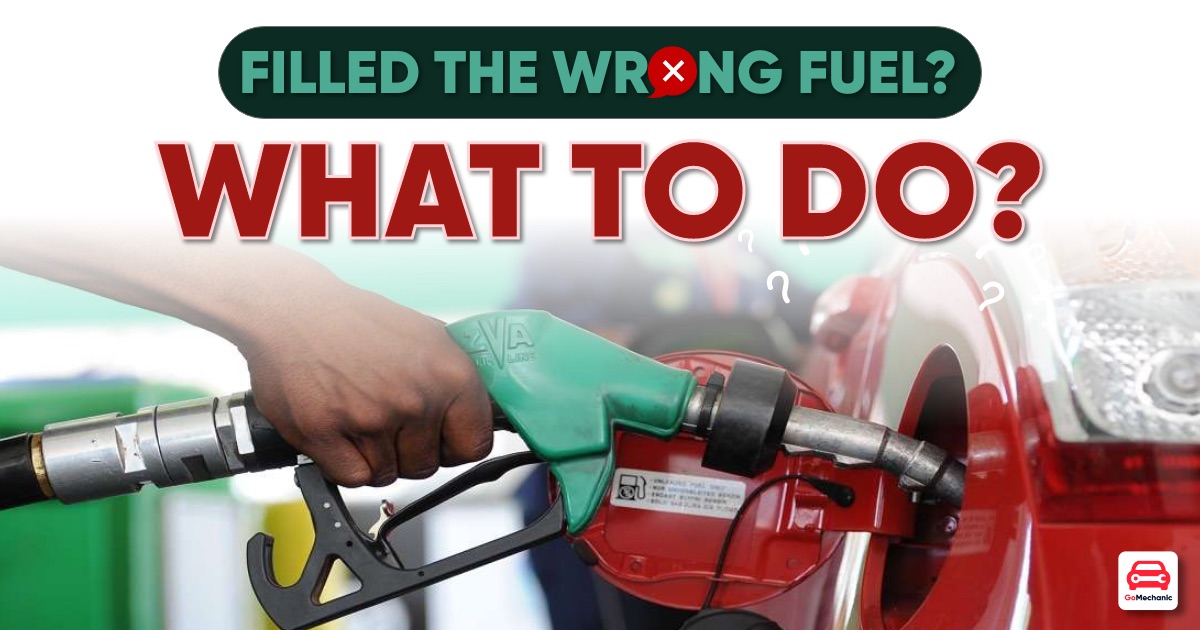
If you haven’t started the engine: don’t.
Leave the vehicle where it is, and if you’re at a fuel station, get help moving it out of the way of the pump rather than driving it, even a short distance.
If the engine is already running: turn it off immediately
as soon as it’s safe to do so. The sooner the engine stops, the less of the wrong fuel gets pulled through the system and the smaller the repair is likely to be.
Wrong Fuel Draining Process
- Fuel Tank Clean Up
- Fuel Filter Clean Up
- Fuel Line Clean Up
- Fuel Pump Clean Up
- Fuel Injector Clean Up
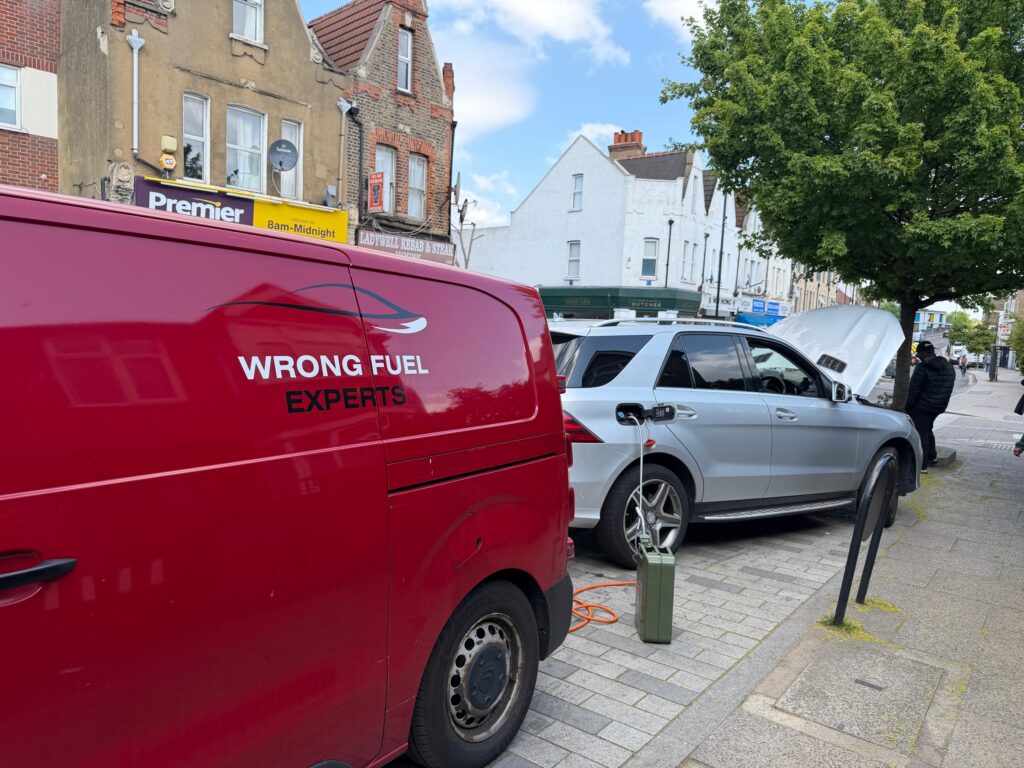 This page covers, in full detail, why diesel affects a petrol engine differently than petrol affects a diesel engine, the symptoms to watch for, exactly what our recovery process involves, cost factors, how the situation varies by vehicle type, and answers to the questions we’re asked most often by drivers in this situation.
Why Does This Happen, Given the Nozzle Design?
It’s a fair question, since the standard advice is that diesel nozzles are physically too wide for a petrol filler neck. In practice, several situations still lead to diesel ending up in a petrol tank:
Older vehicles and non-standard filler necks.
The nozzle-width regulation only fully took effect for new vehicles from 2019 onwards, meaning a significant number of older cars on UK roads today were built before this design safeguard existed, and their filler necks may not reliably reject a diesel nozzle.
Self-service and unattended pumps.
At some self-service or automated forecourts, particularly abroad, nozzle sizing standards can differ from UK regulations, meaning a diesel nozzle from a different country’s pump design may fit into a UK petrol filler neck that would normally reject a UK-standard diesel nozzle.
Container refuelling.
Diesel decanted into a fuel can and then poured into a petrol tank — for example, when topping up from a jerry can in an emergency, or when someone assumes a container of fuel is the correct type without checking — bypasses the nozzle-size safeguard entirely, since it’s not going through a pump nozzle at all.
Confusion with company or hire vehicles.
As with petrol-in-diesel, a driver switching between a personally-owned petrol car and a diesel company car or hire vehicle (or vice versa) can occasionally select the wrong pump out of habit, even where the nozzle design would normally prevent an accidental fit — sometimes through forcing a nozzle that “should” be rejected, without realising the resistance was a safety feature.
Vehicle unfamiliarity.
A large proportion of misfuelling incidents happen in hire cars, courtesy cars, newly-leased vehicles, or a partner’s or family member’s car — situations where the driver doesn’t have the years of muscle memory that usually prevents this mistake in their own regularly-driven vehicle.
Whatever the specific cause, the recovery approach and urgency are the same once the mistake has happened.
The Science: Why Diesel Damages a Petrol Engine
Understanding what actually goes wrong inside a petrol engine when diesel is introduced helps explain both the symptoms you might notice and why our recovery process is structured the way it is.
How a petrol engine ignites fuel
A petrol engine relies on a precisely-timed electrical spark, generated by the spark plugs, to ignite a fine mist of vaporised petrol mixed with air inside each cylinder. This is fundamentally different from a diesel engine, which ignites fuel through compression alone, without a spark. Petrol is formulated to vaporise easily and ignite readily from a spark; diesel is a thicker, oilier fuel formulated to ignite under the extreme pressure and heat generated by compression, not from a spark, and it does not vaporise anywhere near as readily.
What happens when diesel enters a petrol fuel system
When diesel is introduced into a petrol engine’s fuel system, several things go wrong simultaneously:
Spark plug fouling.
Diesel doesn’t burn cleanly in a spark-ignition environment. Instead of vaporising and igniting properly, it tends to leave behind carbon and oily residue that coats the spark plug electrodes. A fouled spark plug can’t generate a clean spark, which directly causes misfiring — the engine failing to fire correctly in one or more cylinders.
Injector and fuel system clogging.
Diesel’s higher viscosity (it’s a thicker, “oilier” fluid than petrol) means it doesn’t flow through fuel injectors designed for a much thinner fluid in the same way. This can cause injectors designed for petrol’s spray pattern to deliver fuel poorly, worsening combustion further and potentially causing physical residue buildup inside injectors designed for a different fluid altogether.
Incomplete or failed combustion.
Even where some ignition does occur, diesel’s different combustion characteristics compared to petrol mean it often doesn’t burn completely within the short window of a petrol engine’s compression and ignition cycle, which is tuned around petrol’s much faster-burning properties. This incomplete combustion is a major reason why diesel-contaminated petrol engines tend to run roughly, stall, or fail to start at all, rather than running smoothly for an extended period the way a diesel engine with mild petrol contamination sometimes can.
Catalytic converter risk.
Excess unburned fuel passing through to the exhaust system due to incomplete combustion can, if the engine is run for an extended period in this state, cause damage to the catalytic converter — a component that’s expensive to replace and, unlike a fuel pump or injector, isn’t something we can address directly as part of a fuel drain, making prompt action even more valuable here.
Why diesel-in-petrol often causes symptoms faster than petrol-in-diesel
One notable difference from the reverse situation is that diesel contamination in a petrol engine tends to produce obvious symptoms — rough running, stalling, or failure to start — more quickly and more noticeably than petrol contamination in a diesel engine often does. This is, in a strange way, slightly protective: because the car is more likely to struggle or fail to start almost immediately, drivers are less likely to drive any meaningful distance on the wrong fuel before realising something is seriously wrong, which limits how far the contamination can spread through the system compared to some petrol-in-diesel cases where the vehicle continues running normally for longer.
Warning Signs You’ve Misfuelled
If diesel has gone into your petrol tank, watch for:
1. **Difficulty starting**, or the engine cranking normally but failing to catch.
2. **Rough or uneven idling** if the engine does start.
3. **Misfiring** — a distinct stumble, hesitation, or loss of power, particularly noticeable under acceleration.
4. **The engine cutting out shortly after starting**, sometimes within seconds.
5. **Visible exhaust smoke**, often heavier or darker than normal.
6. **A noticeable smell of diesel** from the engine bay or exhaust, distinct from the usual petrol smell.
7. **The check engine light** illuminating, sometimes alongside a misfire-specific warning code if the vehicle’s onboard diagnostics detect the issue.
If you notice any of these symptoms shortly after refuelling and suspect diesel contamination, stop the vehicle as soon as it’s safely possible and avoid continuing to drive.
What We Do to Fix It: The Full Recovery Process
Step 1: Assessment on arrival
We start by confirming how much diesel was introduced, whether the engine was started (and for how long, including whether it ran roughly, stalled immediately, or ran for a short period before symptoms appeared), and the specific vehicle’s fuel system layout.
Step 2: Complete fuel tank drain
We remove all of the contaminated fuel from the tank using specialist mobile drainage equipment — not a partial drain or dilution approach.
Step 3: Fuel line and filter flush
Any diesel that reached the fuel lines and filter before the engine stopped is flushed out, and the fuel filter is typically replaced, since diesel residue in a filter designed for petrol can affect flow and continue to cause issues even after the tank itself is clean.
Step 4: Spark plug inspection and injector check
Because diesel contamination is particularly likely to foul spark plugs, we inspect these as standard where the engine was started, cleaning or replacing them as needed. We also check the injectors for any signs that diesel’s different viscosity has affected their spray pattern or caused residue buildup, particularly if the engine ran for more than a very brief period.
Step 5: Refill with clean petrol
Once the system has been drained and flushed, we refill with clean petrol at standard pump rates.
Step 6: Test start and running check
We start the engine and check for smooth running, listening for any remaining misfire, rough idle, or unusual noise, and check that no warning lights remain illuminated, before considering the job complete.
Because diesel is a thicker, slower-moving fluid than petrol, and because symptoms tend to appear quickly (often preventing the vehicle from being driven far, if at all, before the mistake becomes obvious), a diesel-in-petrol call-out is often — though not always — a somewhat more contained job than the equivalent petrol-in-diesel scenario, provided the vehicle wasn’t driven any distance before the problem became apparent.
How This Differs by Vehicle Type
Older petrol vehicles (carburettor or early fuel injection)
Very old petrol vehicles using carburettors rather than fuel injection are now rare on UK roads, but where they do appear, diesel contamination causes similar fouling issues, compounded by the fact that carburettor jets are often even more sensitive to a fluid of the wrong viscosity than modern fuel injectors are.
Modern fuel-injected petrol vehicles
The vast majority of petrol cars on the road use electronic fuel injection, and while generally more robust against contamination than older carburettor systems, they’re still significantly affected by diesel’s poor atomisation and combustion characteristics in a petrol engine, as described above.
Turbocharged petrol engines
Increasingly common in modern petrol vehicles, turbocharged engines rely on precise air-fuel mixtures and clean combustion to manage the additional stresses of turbocharging. Incomplete combustion caused by diesel contamination can be particularly hard on a turbocharged engine’s exhaust-side components, including the turbocharger itself, making prompt professional recovery especially valuable here.
Petrol hybrid vehicles
Hybrid vehicles combining a petrol engine with an electric motor are subject to the same fuel contamination risks for the petrol engine component specifically. The electric motor and battery system are unaffected by fuel contamination, but the vehicle will typically still rely on the petrol engine for sustained higher-speed driving or extended range, so the contamination still needs to be addressed even if the vehicle can initially move on electric power alone.
Motorcycles and smaller petrol engines
Motorcycles and other smaller petrol-engined vehicles are also susceptible to diesel contamination, and given their smaller fuel systems and often simpler carburettor or injection setups, the effects of contamination — spark plug fouling and poor combustion — can become apparent very quickly. We’re equipped to handle motorcycles as well as cars.
Cost Factors: What Affects the Price
Pricing starts from £99, with the final cost depending on:
Whether the engine was started, and for how long.** As with petrol-in-diesel, a tank-only drain where the engine never ran is the simplest scenario.
Whether spark plugs need cleaning or replacement.** Fouled spark plugs are a common consequence of diesel contamination and are often included as part of the standard recovery process where needed.
Vehicle type and tank size.
Any additional component damage discovered during assessment**, which we’ll always quote separately and discuss with you before proceeding.
We provide a free, no-obligation quote once we’ve assessed your specific vehicle and circumstances.
Insurance, Warranty, and Documentation
**Insurance.** As with any misfuelling incident, standard motor insurance generally treats this as driver error rather than an insured mechanical fault, though breakdown cover with specific misfuelling assistance may apply — it’s worth checking your policy. We provide detailed invoices to support any claim you do pursue.
**Manufacturer warranty.** Diesel-in-petrol contamination itself doesn’t usually void a manufacturer’s warranty, but continuing to drive on contaminated fuel and causing further damage — particularly to the catalytic converter, which can be a consequence of prolonged incomplete combustion — can complicate a warranty claim for that specific damage.
**Hire and lease vehicles.** If this happened in a hire car, most companies have a defined process, often involving an excess charge. We provide documentation suitable for this, and recommend informing the hire company promptly in addition to calling us.
Prevention: Reducing the Risk of This Happening Again
While mistakes can happen to anyone, a few small habits meaningfully reduce the risk:
Be extra cautious with older vehicles or hire cars**, where the newer nozzle-size safeguards may not apply.
Check the fuel type sticker** near the filler cap before refuelling, particularly for a car you don’t drive often.
Never assume a jerry can or fuel container is correctly labelled** — always double-check contents before pouring fuel manually into a tank in an emergency situation.
If a diesel nozzle seems to require unusual force to insert into your petrol car’s filler neck, stop.** This resistance is very likely the safety design working as intended, not a fault with the pump.
Common Myths About Petrol in a Diesel Car
Diesel physically can’t get into a petrol car, so this must be something else.”** While the 2019 nozzle regulation makes this harder for newer vehicles at standard UK forecourts, it doesn’t make it impossible, particularly for older vehicles, non-standard pumps, or manual container refuelling, as covered above.
If the engine won’t start at all, nothing is being damaged.”** Even a failed start attempt draws some fuel through the system and can cause the starter motor and battery additional strain from repeated attempts, and any diesel that has reached the injectors or spark plugs during cranking can still cause fouling even without a successful start.
Diesel is ‘cleaner’ or ‘safer’ than petrol, so a small amount can’t hurt a petrol engine much.”** This confuses diesel’s own combustion safety characteristics (it’s less flammable than petrol in open air, which is actually why diesel engines rely on compression rather than a spark) with its suitability inside a system designed for a completely different fuel type. Diesel is not compatible with a petrol engine’s combustion process regardless of any other safety property it has in isolation.
A quick engine flush additive will sort it without needing a professional drain.”** Aftermarket flush additives are designed for routine maintenance of a correctly-fuelled system, not for removing bulk contamination from the wrong fuel type entirely. They aren’t a substitute for physically draining the contaminated fuel.
Frequently Asked Questions
How much does it cost to fix diesel in a petrol car?
Pricing starts from £99, and the exact cost depends on your vehicle and whether the engine was started — we'll always give you a free quote before starting work.
I've only put a small amount of diesel in by mistake before realising — is it still a problem?
Yes, even a small amount of diesel can affect a petrol engine's spark plugs and injectors, and it's always worth having it drained properly rather than risking a breakdown later or gradually worsening performance.
Can diesel damage a petrol car's catalytic converter?
It can, particularly if the engine is run for an extended period on contaminated fuel, since incomplete combustion can send excess unburned fuel through to the exhaust system. A prompt drain significantly reduces this risk.
I've hired a car and put the wrong fuel in it — what should I do?
Don't start the engine, and call us straight away — we'll carry out the drain and flush directly and provide documentation suitable for the hire company's excess or damage claim process. We'd also recommend informing the hire company as most have their own procedure for this.
How is this different from putting petrol in a diesel car?
The underlying mechanism is different — diesel fouls spark plugs and doesn't combust properly in a spark-ignition engine, whereas petrol strips lubrication from a diesel injection system. Symptoms from diesel-in-petrol also tend to appear faster (rough running, stalling, or failure to start almost immediately) compared to petrol-in-diesel, which can sometimes run more normally for longer before problems show up.
Will the car definitely fail to start if I've put diesel in a petrol tank?
Not always — it depends on how much diesel went in relative to the remaining petrol, and how much fuel was already in the tank. Some vehicles may start and run roughly for a short period before symptoms become obvious, while others may fail to start at all.
Do you need to replace my spark plugs every time?
Not necessarily — it depends on the extent of fouling found during our assessment. We only replace what's actually needed, and we'll explain what we find and why before carrying out any additional work beyond the standard drain and flush.
Can you fix it if I've already tried to start the car several times?
Yes, in the great majority of cases. Repeated failed start attempts don't typically cause additional damage beyond what's already occurred from the fuel contamination itself, though we'd recommend not continuing to attempt starts once you suspect misfuelling, simply to avoid unnecessary strain on the starter motor and battery.
Do you carry out this service for motorcycles as well as cars?
Yes, we're equipped to handle motorcycles and other smaller petrol-engined vehicles, as well as cars, vans, and larger commercial vehicles.
What if I'm not sure whether it's diesel or just old, degraded petrol causing the problem?
If you're unsure what's causing your symptoms, we can assess and, if needed, sample the fuel on-site to identify the specific issue — whether that's diesel contamination, old fuel, or something else entirely such as water ingress.
